When Not To Visit Cairns: Which Tours Suffer In The Wet Season
Cairns rainfall, cyclone season dates, planned railway and cableway closures, and which tour types to weigh up month by month before you book.
Cairns averages 2,019.1 mm of rain a year across 119.9 rain days, and the spread between its wettest and driest months is enormous: February averages 436.1 mm while August manages just 26.9 mm. That gap is the single biggest factor in deciding when not to visit, bigger than any price difference between seasons. No operator publishes a weather policy, so no tour can be described as running, cancelling or changing in rain; what the record does tell you is which months load the dice against view-dependent trips, and which dated closures remove certain experiences entirely regardless of the sky.
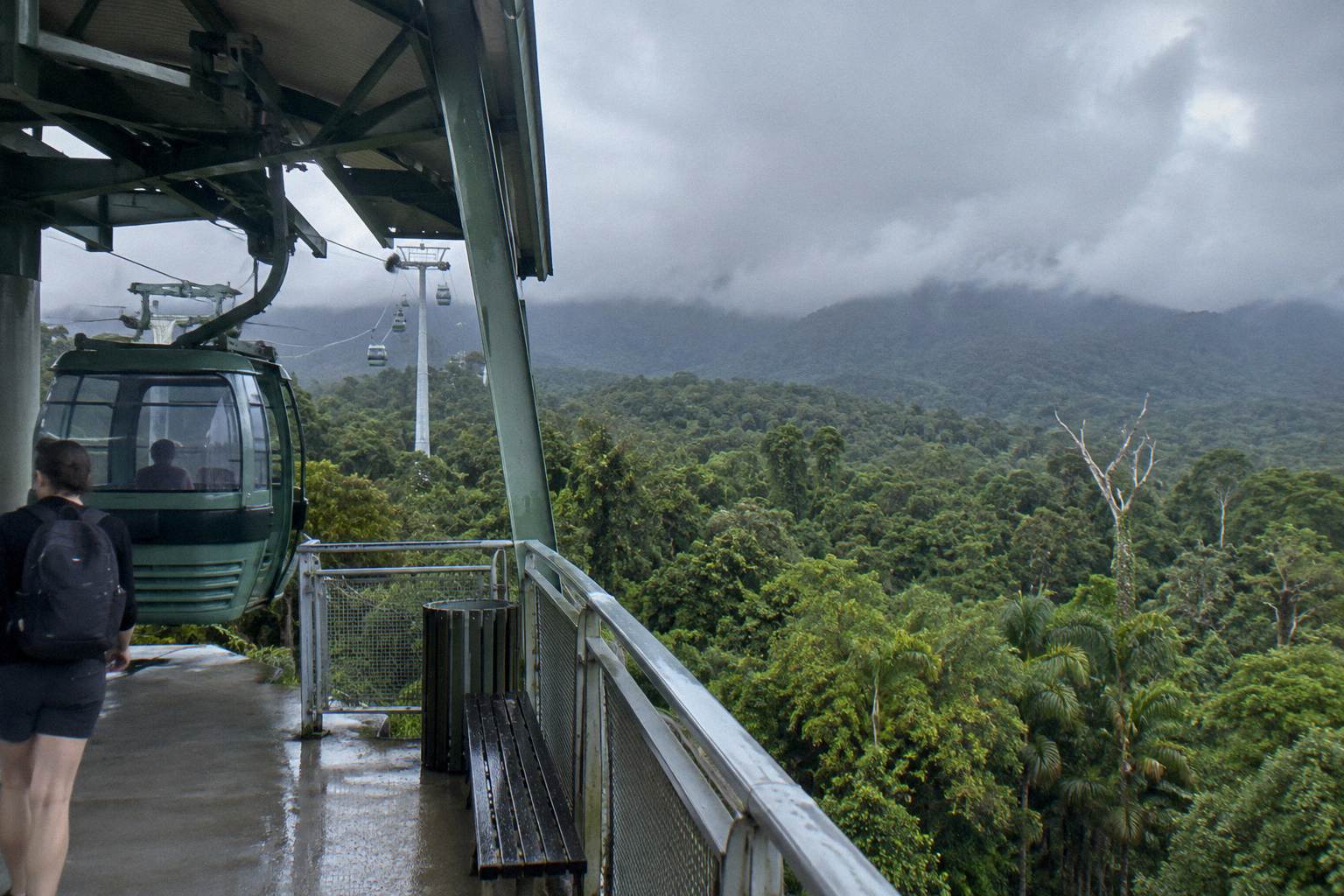
The real framing is about exposure, not cancellation. A gondola ride above the canopy, a waterfall swim and a lookout over a gorge are weather-exposed by design. An aquarium, a dinner cruise and a walking tour through central Cairns sit much closer to weather-proof. The Bureau of Meteorology numbers, the cyclone calendar and the published closure schedules let you match your dates to the trips you actually want, and every tour listed carries free cancellation up to 24 hours before on the booking page, which is your safety net if the forecast turns.
Which Months Are The Wettest In Cairns?
The three wettest months on the Bureau of Meteorology's Cairns Aero record are February at 436.1 mm, March at 424.3 mm and January at 404.8 mm, while the driest are August at 26.9 mm, July at 33.2 mm and September at 34.8 mm. Annual rainfall totals 2,019.1 mm over 119.9 rain days. The gap between February and August is more than sixteen-fold.
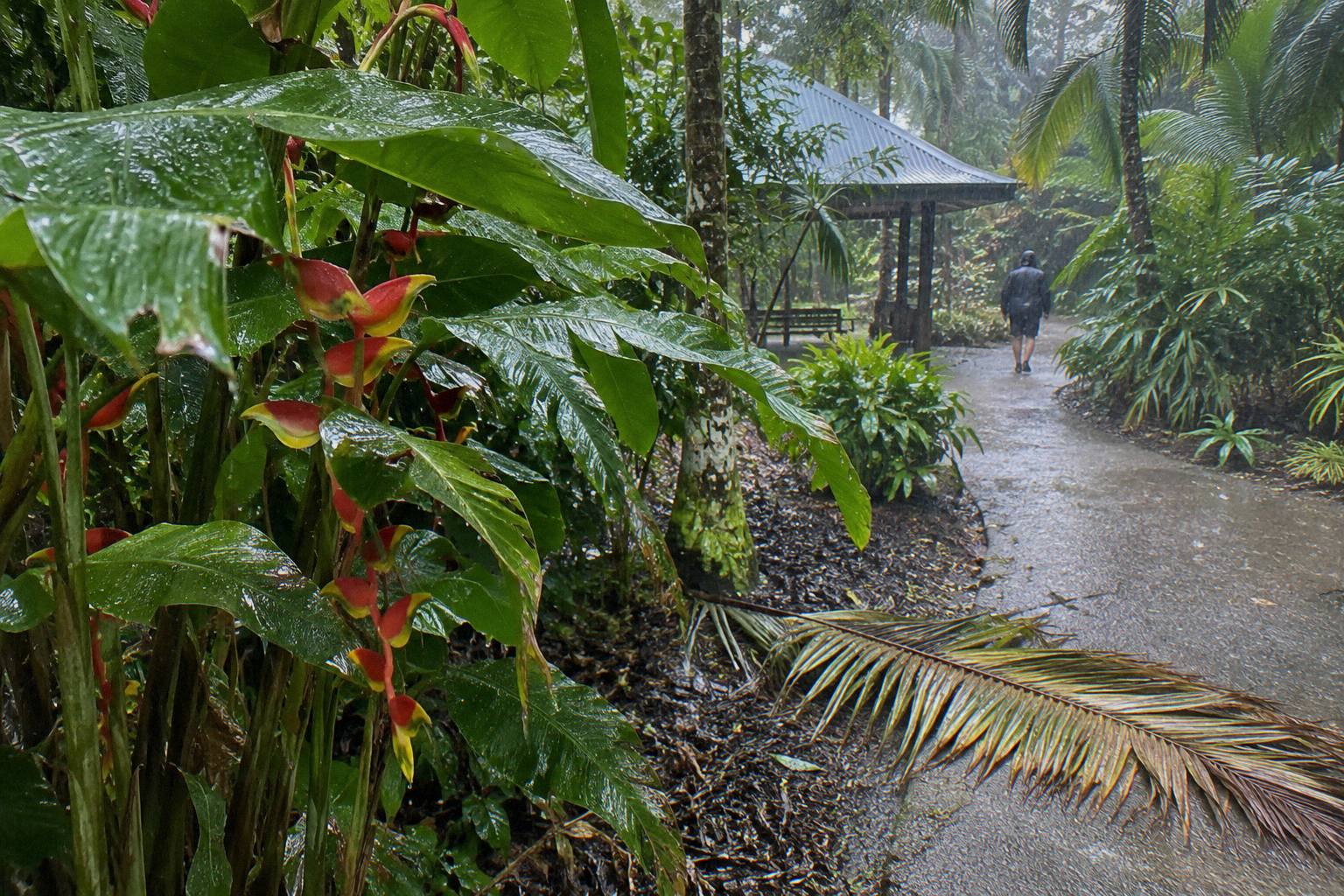
The wet months here are January to March and the dry months July to September, and that is as precise as the seasonal labels get. What the numbers add is a sense of scale. February's 436.1 mm is not drizzle stretched over a month; it is monsoon downpours that arrive hard, flood the gutters for an hour and often clear to sunshine by afternoon. Locals plan around the burst, not around grey skies that last all day, and visitors who do the same usually find the wet season more workable than its reputation suggests.
| Month | Average rainfall | Character of the month |
|---|---|---|
| January | 404.8 mm | Wet season, warm and humid |
| February | 436.1 mm | Wettest month on the record |
| March | 424.3 mm | Wet season tail, still heavy |
| July | 33.2 mm | Dry season |
| August | 26.9 mm | Driest month stated |
| September | 34.8 mm | Dry season, warming |
Temperature barely changes the equation. Mean maximums run from 31.5 °C in January down to 25.9 °C in July, and mean minimums from 23.8 °C to 17.2 °C, so no month in Cairns is cold by southern standards. The full climate table sits on the Bureau of Meteorology's Cairns Aero averages page. Rain, not warmth, is what you are scheduling around, and October offers 8.8 hours of daily sunshine for those who want dry-season conditions without the peak dry-season crowds.
One planning note worth adding: the six months listed above are the only ones with published figures here, so resist the urge to assume the shoulder months sit halfway between them. April, May and June fall outside the published record, and any confident-sounding number for them on a third-party site is a guess. If your dates fall outside the six stated months, the right move is to treat the forecast for your specific week, not the averages, as the guide, and to lean on the 24-hour free cancellation window every booking page here carries.
For a planning comparison of trips that suit either season, the guide to things to do in Cairns worth booking breaks the options down by type rather than by month.
When Is Cyclone Season And Does It Change Tour Plans?
Cyclone season in Cairns runs from 1 November to 30 April, per the Bureau of Meteorology, which means the entire wet season sits inside it. No tour can be described as running, cancelled or altered in a storm, as no operator publishes a weather policy. Free cancellation up to 24 hours before applies on every booking page, and the operator confirms conditions.
A cyclone does not need to land near Cairns to disrupt a trip. Systems tracking far offshore still whip up swell, cloud and wind that change what a day on the water feels like. The practical approach is to book what you want, watch the forecast inside the free-cancellation window, and treat the 24-hour cutoff as the real decision point rather than trying to predict a cyclone weeks out.
Should You Still Book Ahead In The Wet Season?
Yes, and the reason is mechanical rather than optimistic. Small-group trips cap their numbers: the Rainforest And Waterfalls Half-Day Tour takes at most 12 guests, the Cairns History Walking Tour also caps at 12, and the Night Wildlife Walk In The Botanic Gardens runs with no more than 8. Waiting for a perfect forecast can mean the departure you wanted has filled, and the free-cancellation terms on the booking page mean the deposit is not hostage to the weather either way. Book the plan, adjust inside the window, and let the operator confirm conditions on the day.
The same logic applies to the bigger vehicles. Hartley's Crocodile Adventures From Cairns caps at 24 guests and the Spirit Of Cairns Dinner Cruise at 75, while the City Sights Half-Day Tour carries at most 27. None of those numbers is huge, and wet-season departures can still fill because the indoor-heavy alternatives siphon demand toward a small pool of trips. Booking early in the wet season is less about guaranteeing sunshine and more about guaranteeing a seat on whatever the day turns out to be.
What Can You Still Do When It Pours In Cairns?
The weather-resilient options include Cairns Aquarium Tickets at from US$41 per person, rated 4.6 from 487 reviews, Night At The Cairns Aquarium from US$60, rated 4.8 from 114 reviews, the Spirit Of Cairns Dinner Cruise from US$98, the Cairns History Walking Tour from US$36 and the Cairns City Sights Half-Day Tour from US$78 with hotel pickup. None of these depends on a distant view.
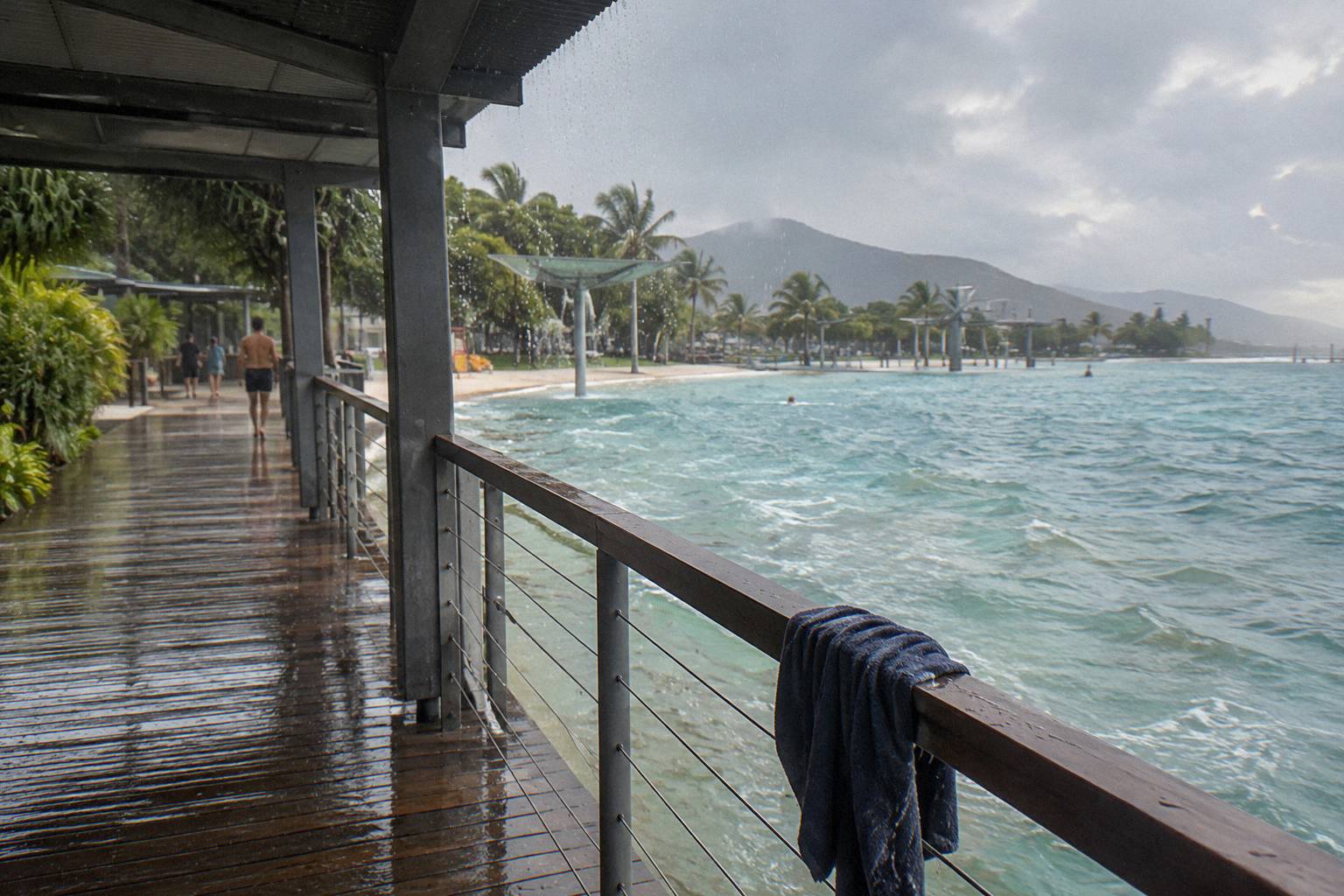
The aquarium deserves its place at the top of the list for a specific reason: 4.6 from 487 reviews is a large sample by local standards. Night At The Cairns Aquarium carries 4.8 from 114 reviews, with the guided tour from US$60 and dinner options from US$103 and up. The venue opens daily 9:30am to 3:30pm including public holidays, last admission 2:30pm, so a rain day still needs a little scheduling.
| Tour | From price per person | Duration | Rain exposure |
|---|---|---|---|
| Cairns Aquarium Tickets | from US$41 | 2 to 3 hours | Indoors |
| Night At The Cairns Aquarium | from US$60 | 2 to 3 hours | Indoors |
| Cairns History Walking Tour | from US$36 | 1.5 hours | Sidewalks, short |
| Spirit Of Cairns Dinner Cruise | from US$98 | 2.5 hours | Covered vessel |
| Cairns City Sights Half-Day Tour | from US$78 | 5.5 to 6.5 hours | Mostly vehicle-based |
| Night Wildlife Walk In The Botanic Gardens | from US$41 | 1 to 2.5 hours | Open air |
Two caveats belong here. The walking tour and the night wildlife walk are open-air, so a monsoon burst affects them directly; the wildlife walk in particular targets animals that behave differently in rain, and the piece on night wildlife tours in rain covers exactly that trade-off. And the City Sights tour's 5.5 to 6.5 hours include stops outdoors between drives, so it shrugs off a shower better than a downpour. The roundup of Cairns rainy day tours goes deeper on the indoor end of the spectrum.
A third caveat is subtler: dinner options on the water need booking more than a walk does. The Sunset And Inlet Cruises trip is from US$48 for the 75-minute inlet cruise and from US$52 for the 90-minute sunset cruise, capped at 12 passengers, which makes it as seat-limited as any walking tour. A wet evening that pushes everyone toward covered, catered options can fill those berths quickly, and the meeting point at Marlin Marina is a short walk from the city core, so the rain exposure getting there is brief but real.
Does The Wet Season Change A Kuranda Day Trip?
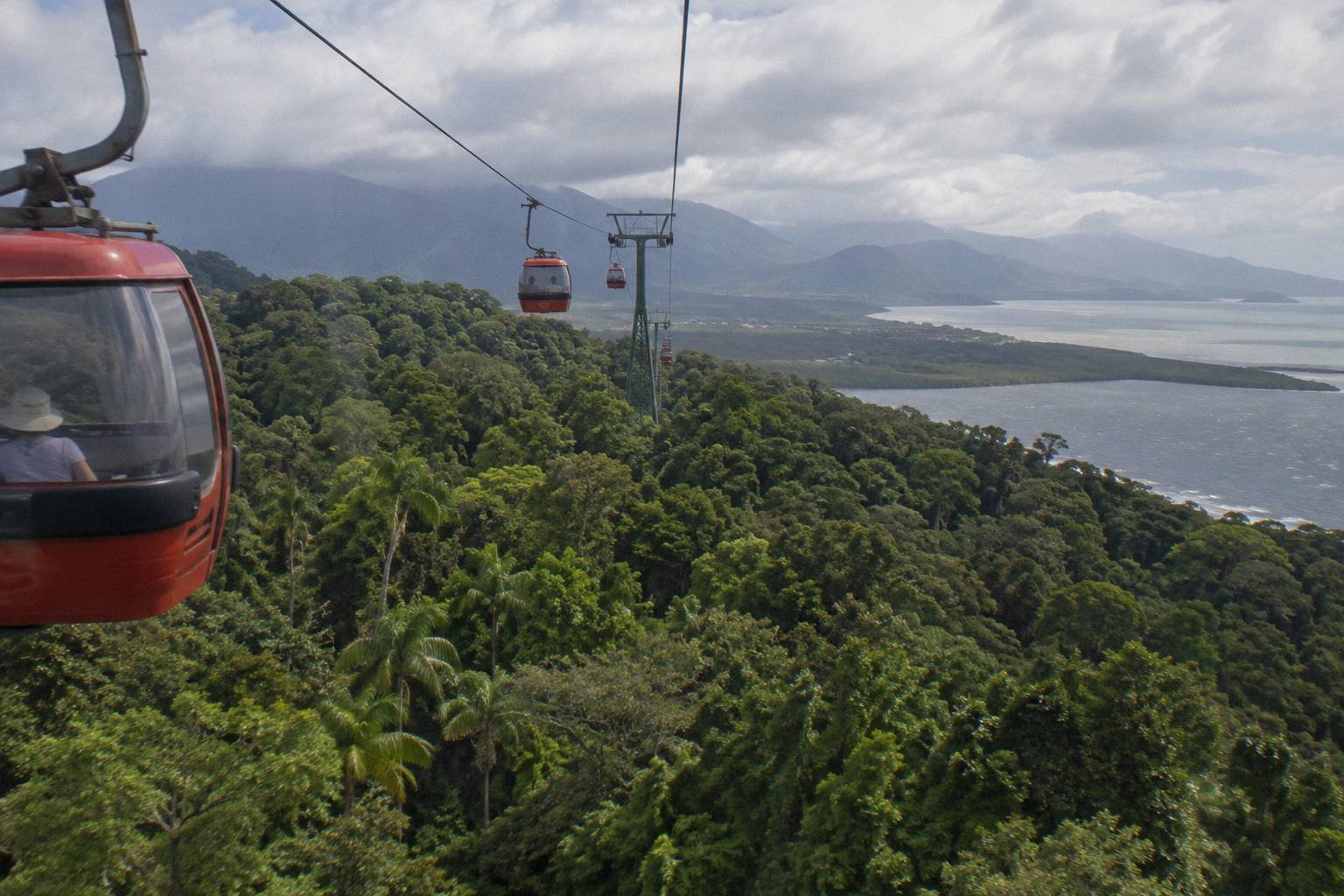
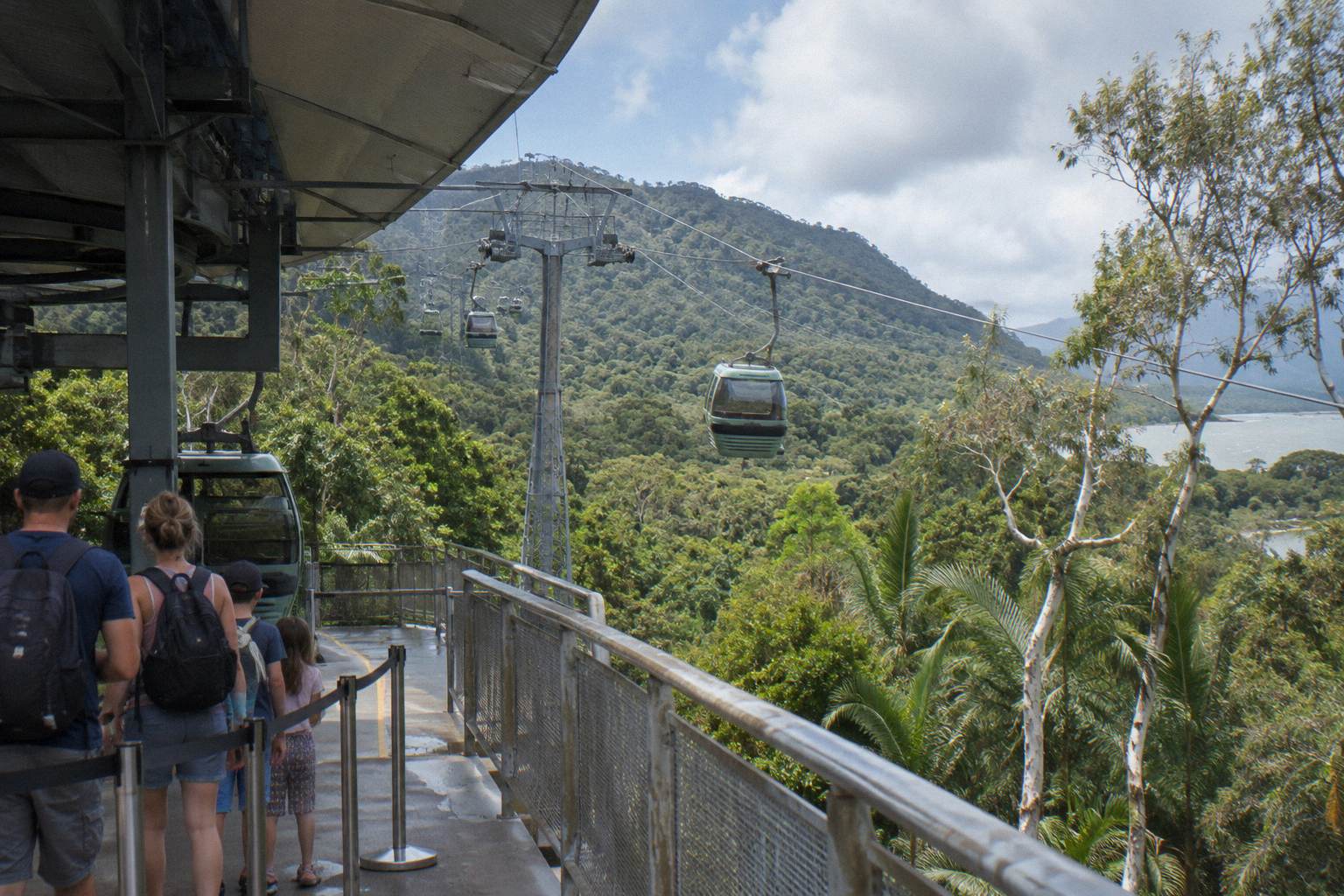
A Kuranda day trip is the most view-dependent big-ticket tour here, from US$147 per person for 7 to 8.5 hours with hotel pickup, because the Skyrail cableway and the Scenic Railway both sell scenery above the canopy and through the gorge. Check the listing before booking for the weather policy. Dated closures can remove parts of the experience entirely, independent of rain.
The railway itself runs twice daily all year except 25 December, on a 34 km line built between 1882 and 1891 through 15 hand-made tunnels and around 40 bridges, with the Cairns to Kuranda leg taking about 1 hour 55 minutes. The timetable is subject to change, so no departure time is worth printing. Fares rise about 3.4% from 1 April 2027, with children 4 to 14 at child fares and infants free.
The Skyrail side carries the bigger date trap. Normal Smithfield to Kuranda operations resume from 4 November 2026 with new gondolas on the Smithfield to Red Peak stretch, but from July to November 2027 the Kuranda line from Red Peak to Kuranda closes for the next upgrade stage, and round trips run Smithfield to Red Peak only. A cableway ticket in that window does not reach Kuranda by gondola; the official upgrade page states the staged schedule. Pair that with the railway's own 2027 closure blocks, listed on the operator's closure dates page, and mid-May through early November 2027 becomes a patchwork for this one day trip.
The deeper comparison of the two halves of the journey, train first or cableway first, sits in the site's guide to the Kuranda Scenic Railway and Skyrail tour. The short version for weather planning: rain that hides the view from a gondola still leaves the railway's tunnels, bridges and heritage carriages as the experience, which is why a wet-season Kuranda day leans railway-heavy by temperament rather than by any stated policy.
Which Planned Closures Should You Check Before Booking?
Three dated closures matter: the Din Din Barron Falls lookout track is closed 23 November to 4 December 2026 for maintenance, the Kuranda Scenic Railway cancels all services on four blocks in 2027, and the Skyrail's Kuranda line closes July to November 2027. Each removes a specific experience regardless of weather, and none is reflected in any tour price.
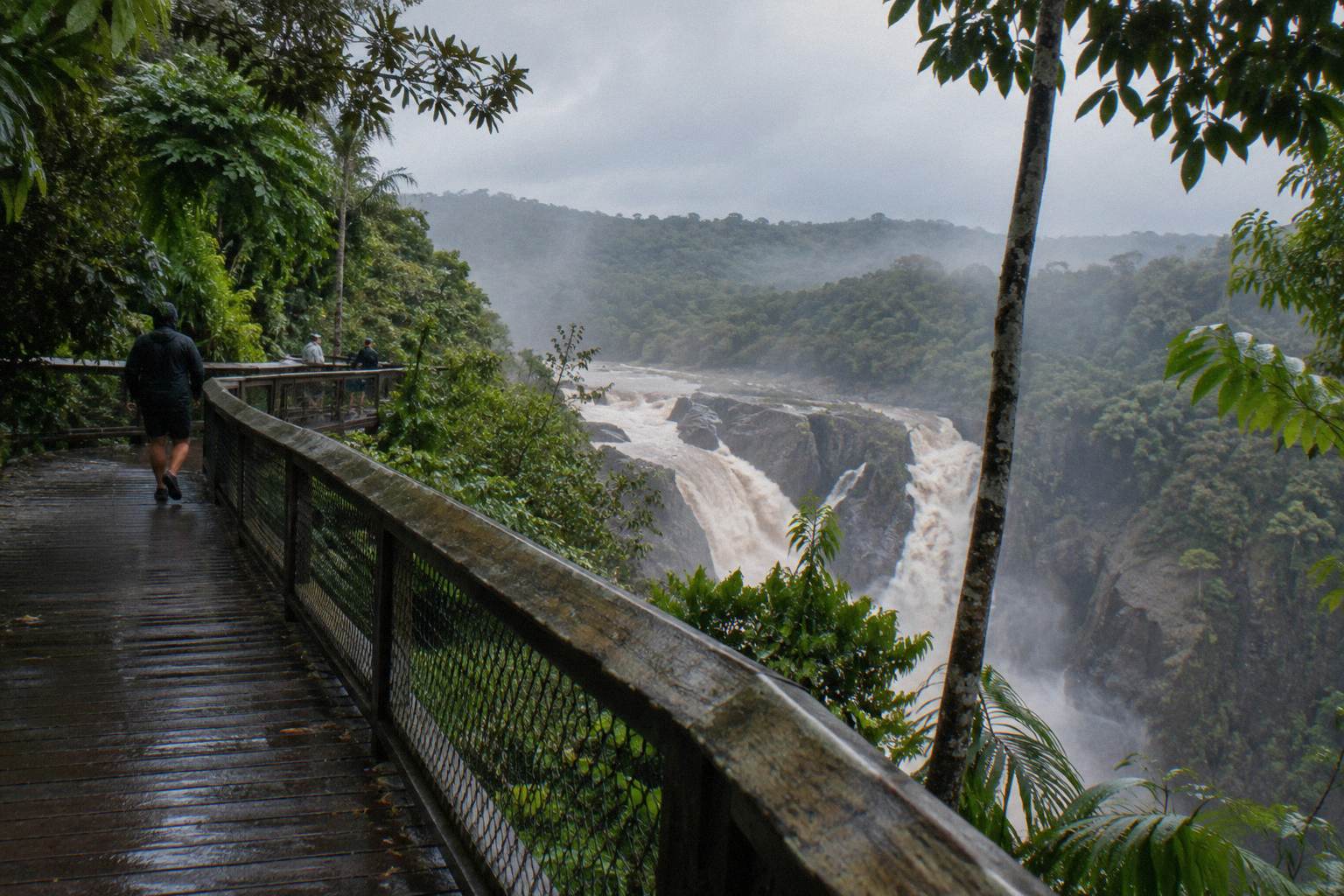
The Barron Falls detail is easy to miss because it looks small. The track is only 800 m, about 15 minutes each way, graded easy, starting at the Barron Falls car park, and it is the access point for the waterfall lookout that Skyrail passengers ride to see. Queensland Parks lists the 23 November to 4 December 2026 closure under its walking tracks summary for Barron Gorge. Anyone booking a Kuranda trip in that fortnight should know the lookout is off the table before paying, not after.
| Closure | Dates | What it removes |
|---|---|---|
| Din Din Barron Falls lookout track | 23 Nov to 4 Dec 2026 | The waterfall lookout walk |
| Kuranda Scenic Railway | 10 to 14 May, 7 to 11 Jun, 11 to 15 Oct, 1 to 5 Nov 2027 | All railway services |
| Skyrail Kuranda line (Red Peak to Kuranda) | Jul to Nov 2027 | Cableway access to Kuranda |
A counterintuitive point in the park's favour: Barron Falls is at its most dramatic in the wet. The gorge carries far more water after monsoon rain than in the dry months, so a February or March visit trades view reliability for sheer volume when the clouds part. That is a genuine trade-off, not a marketing line, and it applies to the wider Cairns City Tours lineup of rainforest trips: the wet season fills the falls and closes nothing, while the dry season guarantees visibility and thins the water.
The park itself is worth knowing a little about beyond the falls. Barron Gorge National Park is part of the Wet Tropics World Heritage area, managed together by the Djabugay people and Queensland Parks and Wildlife. There is no camping, no fishing and no pets, and both the railway and the cableway cross the park on their way to Kuranda, which is why so many of the closures covered above converge on one stretch of country. For details on any of the other walks, lookouts or swimming spots in the park, check with the operator and the parks service before setting out.
Which Wildlife Tours Weather The Wet Best?
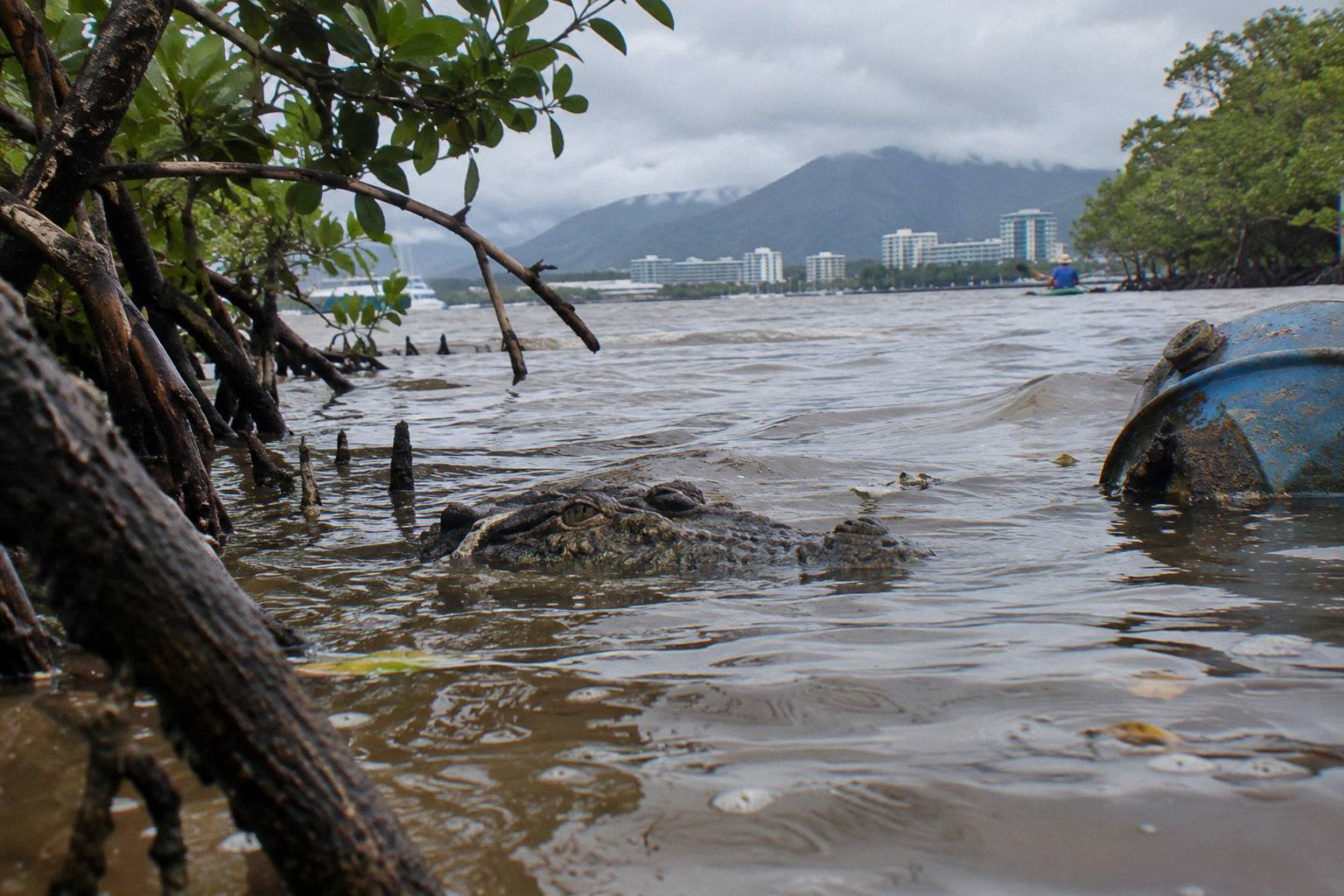
Hartley's Crocodile Adventures From Cairns runs 5.5 to 6.5 hours from US$88 per person with hotel pickup, and the park itself opens daily 8.30am to 5pm except Christmas Day and Ironman day (Sun 14 Jun), with the ticket including one boat cruise of about 20 minutes. Crocodiles are active in warm water, so the wet season is not a quiet time for them, though check the listing for the operator's weather policy before booking.
The park caps this transfer-and-admission trip at 24 guests, which keeps it comfortable even when wet weather pushes everyone toward the covered exhibits and the cruise. Hartley's own site is crocodileadventures.com, a detail worth knowing because hartleys.com.au belongs to an unrelated finance firm, a trap the site's fuller Hartley's Crocodile Adventures guide also flags. Show and feeding times are not verified, so check the park's own schedule rather than any secondhand listing.
Rainforest wildlife follows a different clock again. The Night Wildlife Walk In The Botanic Gardens runs 1 to 2.5 hours from US$41 with a maximum of 8 guests, meeting on Collins Avenue where the gardens themselves are free to enter and open around the clock. The Friends of the Gardens run free guided tours at 10am Monday to Friday with no booking needed, per the council, which makes a rain-scuttled paid walk easy to replace with a free one if the sky clears mid-morning. None of this says any trip is cancelled in rain; it says the wet season has enough texture that a washed-out plan is rarely a lost evening.
Should You Visit In The Wet Season At All?
For most travellers the simple answer is yes, with two exceptions: avoid the exact railway and cableway closure blocks of 2027 if a Kuranda trip is the point of the visit, and think carefully about February if your itinerary is entirely made of view-dependent trips. Prices do not move with the seasons, from US$36 for the history walk to US$147 for the Kuranda day trip, so timing is about experience, not savings.
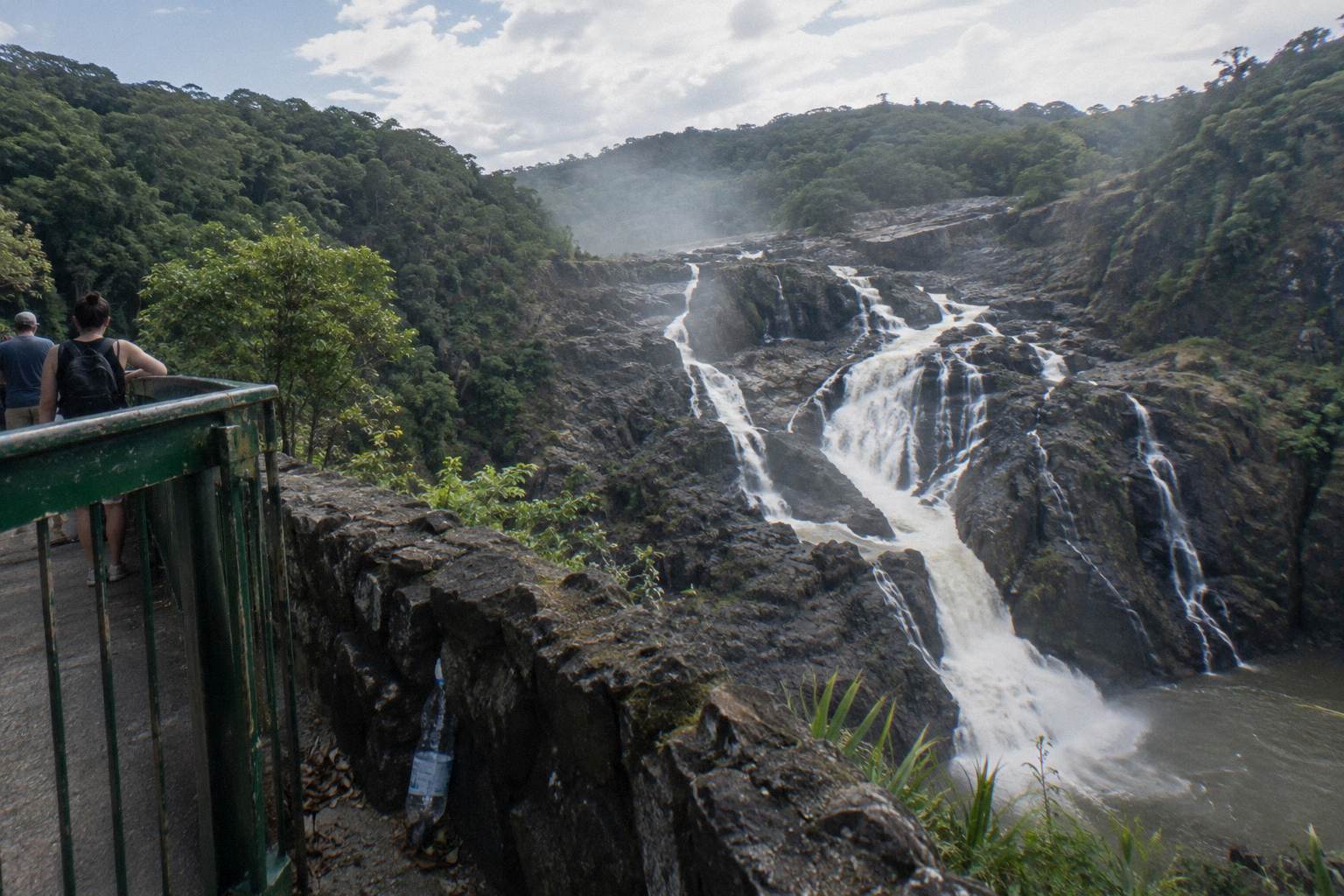
The case for the wet is real. Waterfalls carry volume, crocodile country is at its most alive, the landscape is at its greenest, and the 24-hour free cancellation on every booking page keeps the downside bounded. The case against is equally real for a narrow kind of trip: someone whose whole holiday is the reef lookout, the gorge view and the cableway glide will feel February's 436.1 mm more than someone mixing in the aquarium, a dinner cruise and a history walk.
March deserves a special mention as the pragmatist's pick among the wet months. Its 424.3 mm average sits barely below February's, but it is the tail of the season, and the dry months of July through September, at 33.2 mm, 26.9 mm and 34.8 mm, remain the safe answer for anyone booking far ahead with no flexibility. October's 8.8 hours of daily sunshine marks the shoulder where the record starts leaning warm and dry without the peak-season squeeze.
Common Questions About Visiting Cairns In The Wet Season
When Not To Visit Cairns: Which Tours Suffer In The Wet Season?
Avoid the Kuranda Scenic Railway closure blocks of 10 to 14 May, 7 to 11 June, 11 to 15 October and 1 to 5 November 2027, plus the Skyrail Kuranda line closure from July to November 2027, if a Kuranda day trip is your priority. February, the wettest month at 436.1 mm, most affects view-dependent trips like cableway rides and waterfall lookouts, while indoor and covered options such as the aquarium carry on regardless.
Is Cyclone Season A Reason To Skip Cairns Entirely?
Cyclone season runs 1 November to 30 April, which covers the whole wet season. It is a reason to keep plans flexible rather than to skip the region, since free cancellation up to 24 hours before applies on every booking page listed here and operators confirm conditions closer to the day.
Do Tour Prices Drop In The Wet Season?
Not on the listings covered here. From-prices run from US$36 for the Cairns History Walking Tour to US$147 for the Kuranda Skyrail And Scenic Railway Day Trip, and the only dated price change on record is a Kuranda Scenic Railway fare rise of about 3.4% from 1 April 2027. Timing your visit is about weather and closures, not discounts.
What Is The Driest Month To Visit Cairns?
August, averaging 26.9 mm of rain, is the driest of the months with published figures, followed by July at 33.2 mm and September at 34.8 mm. July to September is the dry season window, and October adds 8.8 hours of daily sunshine as it warms.
Can I Still See Waterfalls In The Dry Season?
Yes, but with less volume. Wet-season months such as February at 436.1 mm fill the falls to their most dramatic state, while the dry months thin the flow. The Rainforest And Waterfalls Half-Day Tour, 5 hours from US$114, runs year-round and its booking page carries free cancellation up to 24 hours before.
Are The Barron Falls Lookouts Always Open?
No. The Din Din Barron Falls lookout track in Barron Gorge National Park, an easy 800 m walk from the car park, is closed from 23 November to 4 December 2026 for planned maintenance, which removes the lookout access during that fortnight regardless of weather.